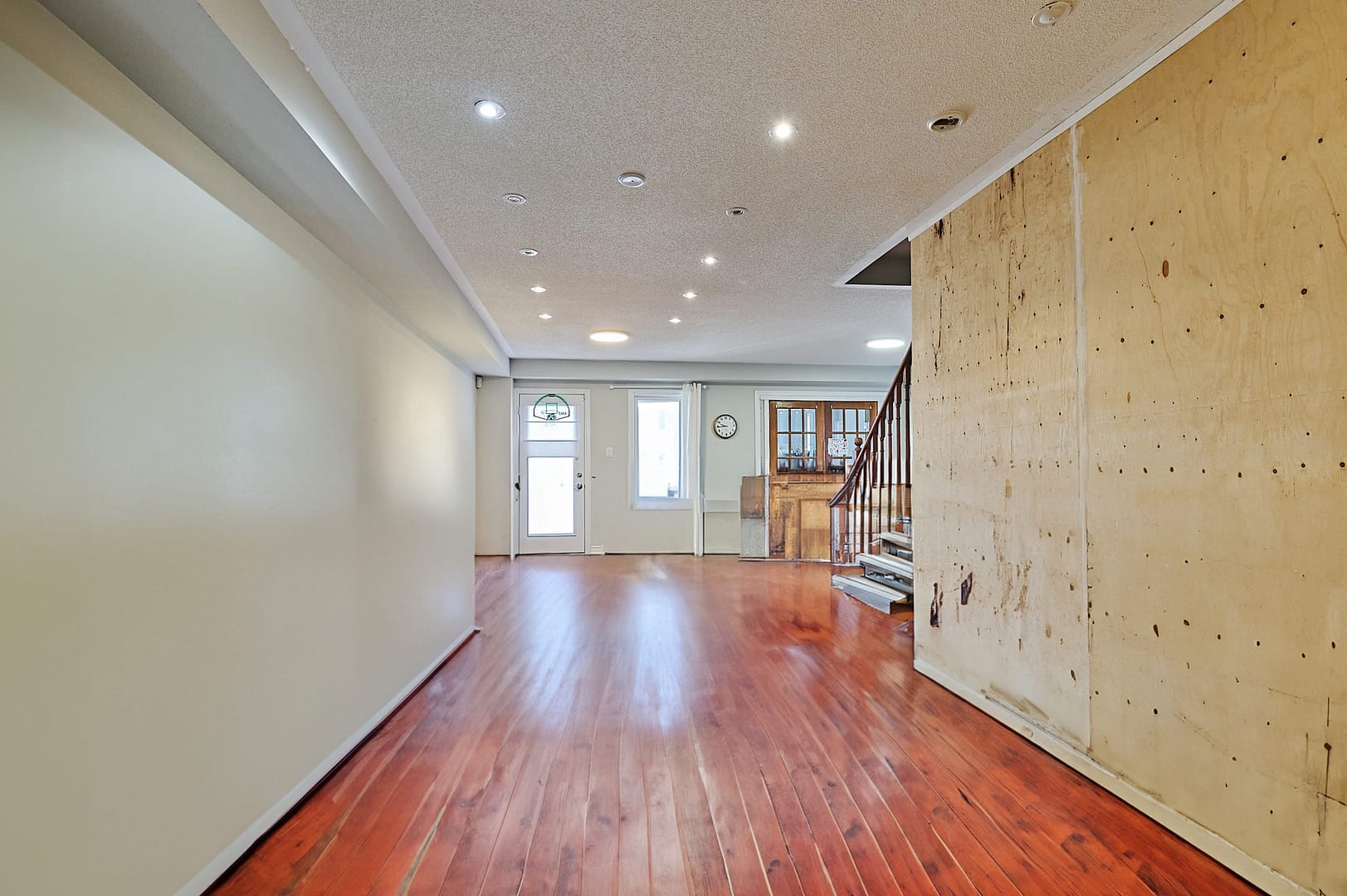
Big Picture 360 Insights · Field Notes — which staging path to choose for this vacant GTA listing, not another “staging sells homes” pep talk.
After photographing more than 1,000 residential properties across Toronto, Mississauga, Oakville, Vaughan, Brampton, and the GTA, the vacant-home pattern is consistent: empty rooms photograph clean, and they also photograph cold. Buyers cannot tell how big the living room is. They cannot tell whether the den is a bedroom. They bounce.
That is usually not a photography problem. It is a scale-and-purpose problem. The 2026 question for agents is not “should we stage?” It is physical furniture, virtual staging, or a hybrid — and how to stay inside Ontario MLS disclosure rules while doing it.
This guide uses real GTA before-and-after examples from our projects, current Big Picture 360 prices, and the decision rules we actually use on photo day.
Quick summary
- Vacant rooms lose clicks because buyers cannot read scale. Staging — physical or virtual — is how you give the room a job.
- Virtual staging is the faster, cheaper MLS path: vacant rooms from $14.95 per photo.
- Physical staging still wins when in-person showings, luxury price, or an awkward layout need real furniture in the space.
- Ontario MLS workflows generally allow furniture-only virtual staging when images are labelled, originals stay in the gallery, and architecture is not digitally rebuilt. Confirm with your brokerage.
- Do not digitally remove walls, windows, flooring, or existing furniture and then pretend the photo is “just staged.” That is a different — and riskier — edit.
Decision table: virtual vs physical staging
| Virtual staging | Physical staging | |
|---|---|---|
| Best for | Vacant condos, new-build empties, speed to MLS, budget-conscious launches | Luxury showings, odd layouts, sellers who will host traffic in a finished home |
| What buyers get | Furnished photos; the house is still empty when they arrive | Furnished photos and a furnished walk-through |
| Typical GTA cost | From $14.95 per photo; 3 vacant rooms can be complimentary with eligible photography via 3FREESTAGING |
Often $1,500–$5,000+ per month, plus install, depending on home size and stager |
| Speed | Days, from photos you already have or from the listing shoot | Days to weeks: source furniture, schedule, style, then photograph |
| MLS / disclosure | Label “Virtually Staged”; keep unfurnished originals; do not alter the building | Real furniture; still disclose if photos are otherwise edited |
| Skip when | The source photo is dark, crooked, or incomplete; or the seller expects the showing to match a fully furnished gallery | The listing must go live this week and the staging budget is a few hundred dollars |
Virtual staging prices are current Listing Photo Finish rates. Physical-staging ranges are typical GTA market observations, not a quote from a staging company. Photography, size bands, and travel still calculate on the order page.
What empty rooms actually cost online
On Realtor.ca, a vacant kitchen is a white box with appliances. In person, that same kitchen might be the reason the house is priced where it is. Online, buyers do not get the extra ten seconds of imagination that a showing provides. They swipe.
Based on our field experience, vacant GTA condos and newly renovated freeholds are where this shows up most. The photography can be excellent — bright, level, complete — and the listing still underperforms because every room asks the same unanswered question: how would I live here?
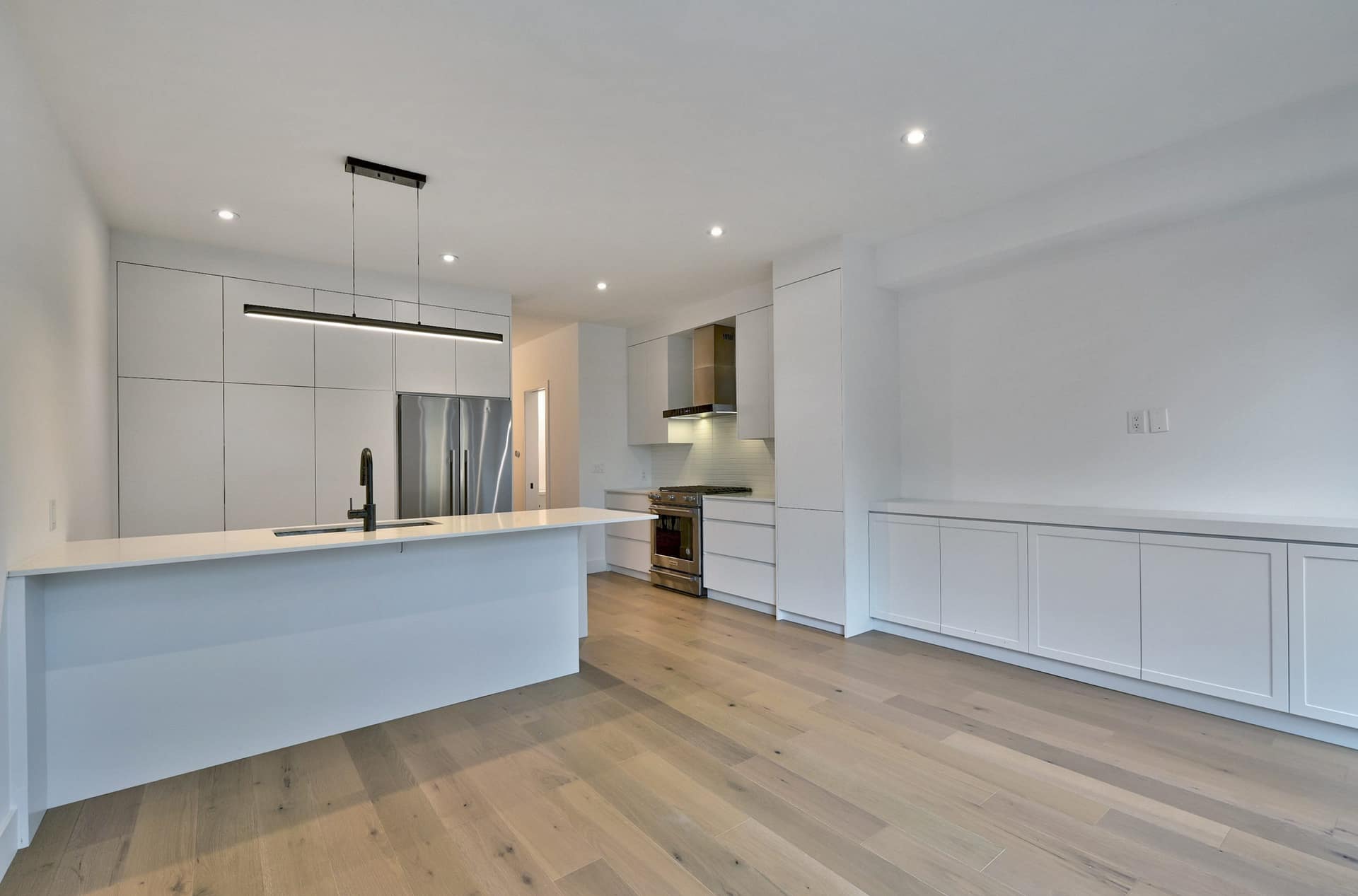
Before: Clean vacant kitchen — accurate, and hard to feel. |
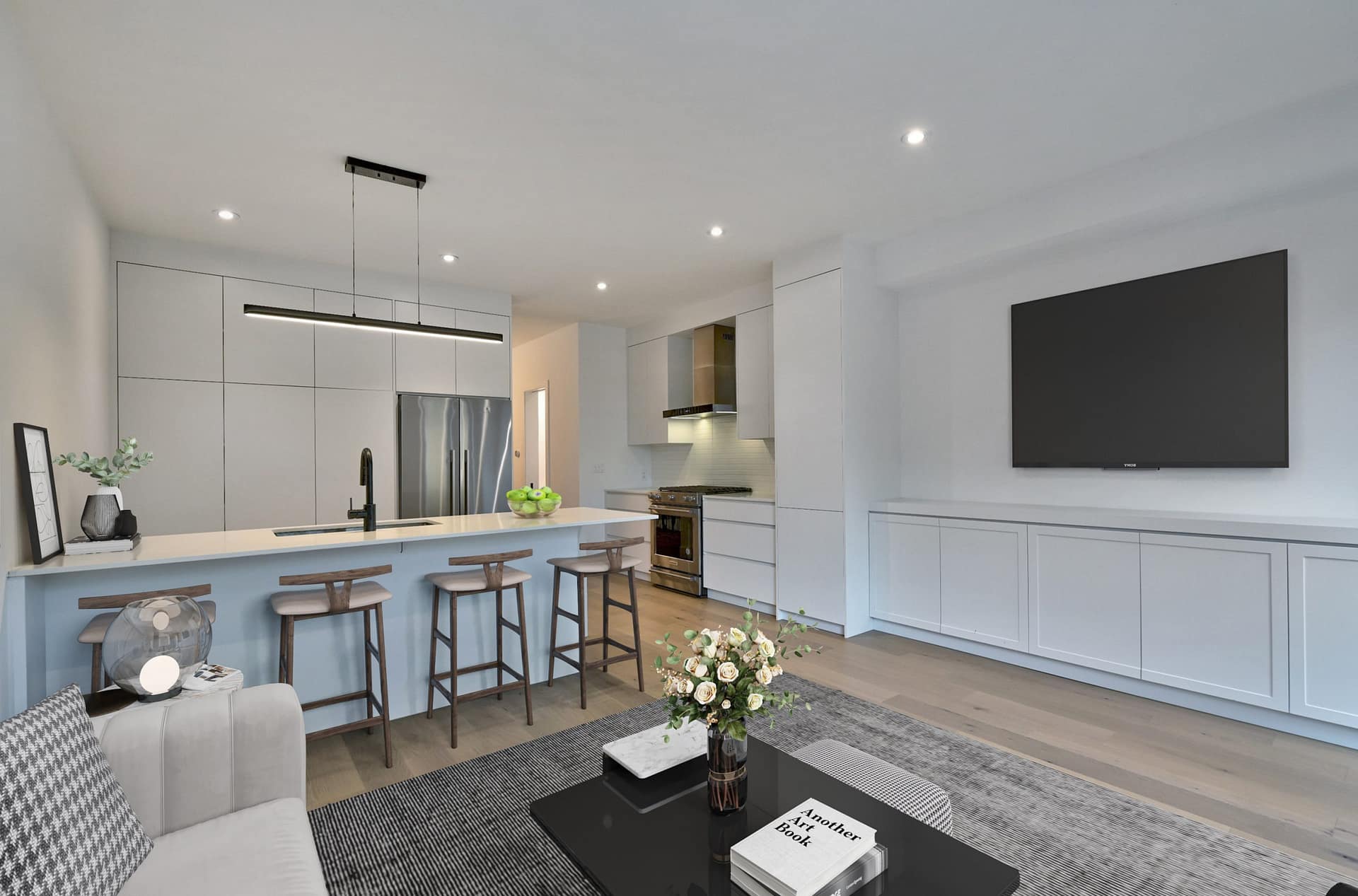
After: Same room, virtually staged — furniture, scale, and a reason to keep scrolling. |
That pair is from a real GTA client project. Nothing about the architecture changed. The room already existed. We gave it a table, chairs, and a reading of how people might use the space. That is the job virtual staging is good at.
Related Field Notes: empty rooms with no plan and what media to book for a vacant listing.
2026 costs: pixels vs furniture
Physical staging is a logistics product: warehouse, truck, install, de-install, monthly rental. Virtual staging is a photo product: one good wide-angle frame, furniture rendered in, originals retained for MLS.
| Path | Big Picture 360 price | What it covers |
|---|---|---|
| Vacant-room virtual staging | $14.95 per photo | Furniture and decor added to an empty room |
| Furnished-room restyle | $14.95 + $6.95 per photo | Existing furniture removal, then restage — confirm MLS rules with your brokerage before publishing |
| Commercial interiors | $35–$55 per photo | Offices, retail, hospitality; matching furniture across multiple views of the same room |
| Three vacant rooms with photography | Promo 3FREESTAGING on eligible vacant residential shoots ($45 value) |
Three virtual staging images included with the photo order when the rooms are truly unfurnished |
| Listing photography (the source) | From $199 up to 1,000 sf | You still need a real, well-lit capture. Staging cannot rescue a cave. |
A practical math example we use with agents: six key rooms at $14.95 is about $90. A month of physical staging on a typical GTA resale is often twenty to fifty times that, before you have even paid for photography. Physical staging can still be the right buy. It is rarely the right buy because it is cheaper.
Order virtual staging from virtual staging services or upload existing photos through Listing Photo Finish. More before-and-afters live on the examples page.
Ontario MLS disclosure: what we tell agents to do
This is not legal advice. Board and MLS rules change, and your brokerage’s compliance desk is the last word. The working 2026 practice we see across GTA listings is:
- Furniture only. Add sofas, beds, rugs, art. Do not add a window, move a wall, change the floor, or invent a kitchen island that is not there.
- Label the image. A clear “Virtually Staged” note on or under the photo. Buyers should not have to guess.
- Keep the original. Upload the unfurnished capture in the same gallery, ideally next to the staged frame, so the listing still “accurately depicts” the property.
- Say it in remarks. One line near the top: some photos are virtually staged to show furniture placement; the property is vacant / unfurnished.
- Do not lead the gallery with a fantasy exterior. Digitally landscaped lawns, invented pools, and AI skies that rewrite the lot are a different problem than a sofa in an empty living room.
PropTx image rules tightened in December 2024. The conservative reading is simple: the photo must still be this property, not a renovation you wish you had. Virtual staging that only furnishes a vacant room, with disclosure, is the path GTA brokerages commonly accept. Virtual staging that rebuilds the house is not.
If the room is already furnished and you want a different look, that is a restyle (our $14.95 + $6.95 path). Digitally removing real furniture can be treated more strictly than adding furniture to an empty room. Ask your brokerage before those images go to MLS.
When virtual staging is the right call
Book virtual staging when:
- The property is vacant or newly painted and the launch date is this week, not next month.
- It is a condo or stacked town where buyers already know the building and need help with this unit’s scale.
- The seller will not pay for a truck of furniture, but will pay for a complete photo set.
- Photos already exist and are compositionally solid — Listing Photo Finish can stage without a reshoot.
- You want two design reads of the same flex room (office vs bedroom) for the property website, while MLS still shows the vacant original.

Before: Vacant living room — floor, windows, and no sense of seating distance. |

After: Same capture, furnished. Buyers can count seats and read the window wall. |

Before: Empty bedroom. Is it a primary, a guest room, or a den? |

After: A bed that fits. That is often the entire objection. |
When physical staging still wins
Virtual staging does not greet buyers at the door. If the conversion event is the Saturday open house, empty rooms in person can undo a beautiful gallery. Physical staging is the better tool when:
- The price point expects a finished walk-through — luxury, relocation, and many freehold listings over a certain threshold.
- The layout is genuinely confusing until you stand in it (split levels, additions, awkward dens).
- The seller is still living there and the “staging” job is really editing-in-place: hide the life, keep the furniture, photograph well. That is photo-day staging, not a warehouse delivery.
- You need scent, lamps on, and a kitchen island that can actually hold a bowl of fruit during the tour.
A hybrid we see work: physically stage the main floor for showings, virtually stage extra bedrooms or a basement rec room that will not get furniture on the budget. Photograph the physically staged rooms as they are. Virtually stage only the rooms that will stay empty. Disclose the virtual frames.
What virtual staging cannot (and should not) do
It cannot fix a dark, phone-shot, incomplete gallery. Furniture on top of a bad capture still looks like furniture on top of a bad capture.
It cannot replace listing photography. Source images need to be wide, level, and lit. If the bones are wrong, book a reshoot instead of polishing a weak foundation.
It should not become a renovation catalogue: new counters, new floors, extra windows, a backyard that does not exist. That stops being staging and starts being a different property.
It also will not match the showing. Tell sellers that before you publish. Buyers who love the staged photos and walk into an echo chamber need the agent to set that expectation in the first text exchange — and the MLS label to back it up.

Before: Dining area as leftover space between kitchen and living. |

After: A table that proves the room is large enough to host. |
A simple booking path
- Shoot the home vacant and camera-ready, or upload existing photos if composition is already solid.
- Stage the rooms that sell the layout: living, dining, primary bedroom, and any flex room buyers will misread.
- Keep unfurnished originals. Label staged frames. Add the remarks line.
- If the listing is an eligible vacant photography order, apply
3FREESTAGINGat checkout for three rooms. - If photos already exist, use the virtual staging upload rather than waiting on another site visit.
Need the rest of the media mix — photos, floor plans, drone, Matterport or iGUIDE — start on /order. City starting points: Toronto, Mississauga, Oakville.
Frequently asked questions
Is virtual staging allowed on MLS in Ontario?
In most GTA workflows, yes — when you add furniture to vacant rooms, label the images, keep original unfurnished photos in the gallery, and disclose in listing remarks. Do not digitally change the building. Confirm the current rule with your brokerage and board before publishing.
How much does virtual staging cost in the GTA in 2026?
Big Picture 360 vacant-room virtual staging is $14.95 per photo. Restyling a furnished room is $14.95 plus $6.95. Commercial interiors are $35–$55 per photo. Eligible vacant photography orders can include three staging images with promo code 3FREESTAGING.
Is virtual staging cheaper than physical staging?
Usually by a wide margin. Six virtually staged rooms can cost under $100. A month of physical staging in the GTA is commonly thousands of dollars. Price is not the only criterion: physical staging still wins when the showing itself needs furniture.
Will buyers be upset when the home is empty in person?
They will if you hide the staging. Label the photos and set the expectation in your first reply. Buyers object to feeling misled, not to a vacant house they already understood was vacant.
Can you virtually stage photos I already have?
Yes, if the photos are bright, wide, and reasonably composed. Upload them through Listing Photo Finish. If they are dark, vertical, or missing rooms, book a reshoot first. Staging will not invent a good capture.
Should luxury listings skip virtual staging?
Not automatically. Luxury vacant rooms still look unfinished online. Use restrained furniture, disclose, and pair virtual staging with a 3D tour when remote buyers need to walk the plan. Compare Matterport vs iGUIDE if the listing also needs a walkthrough.
Can virtual staging replace a floor plan?
No. Staging shows lifestyle. A floor plan or iGUIDE shows measured layout. Vacant homes often need both: furniture so rooms feel human, and a plan so square footage is not a rumour.
What if some rooms are furnished and some are empty?
Stage the empty ones. Declutter and photograph the lived-in ones. Hybrid listings are normal. Do not virtually restyle a messy furnished room as a shortcut around seller prep — that is the expensive version of “we’ll fix it in editing.”
About Big Picture 360 Insights
Big Picture 360 Insights shares practical observations from real property marketing projects across the Greater Toronto Area. This Field Notes piece is a 2026 decision guide for virtual staging versus physical staging — with current prices, Ontario MLS disclosure practice, and before-and-after examples from GTA listing work.
Need the staging, not just the article? Order virtual staging, fix existing photos with Listing Photo Finish, or book listing photography and apply 3FREESTAGING on eligible vacant shoots.